



About the Faculty
The Faculty of Preschool and Primary Education trains the educators who teach and raise children from early childhood to the end of primary school: preschool teachers, primary school teachers and methodologists.
The faculty’s teaching staff carry out research and methodological work on bringing innovative teaching technologies and cross-disciplinary integration into the classroom, and write textbooks for students.
Study programmes
- Preschool EducationTraining teachers and methodologists for preschool institutions.
- Primary EducationTraining primary school teachers: pedagogy, innovative teaching technologies, cross-disciplinary integration.
- Education studiesTheory and methods of pedagogy, education management.
Departments
Department of Pedagogy
The Department of Pedagogy trains teaching staff in the theory and methods of education and in educational management.
Department of Primary Education
The Department of Primary Education trains primary school teachers and researches primary teaching methods.
Department of Pre-school Education
The Department of Pre-school Education trains nursery teachers and methodologists.
Staff
Ernazarova Manzura Saparboyevna
Head of the Department of Primary Education, Doctor of Philology (DSc), Professor
Teaching publications
Teaching publications written by the faculty’s scholars are open to students and teachers: read them online or download them.
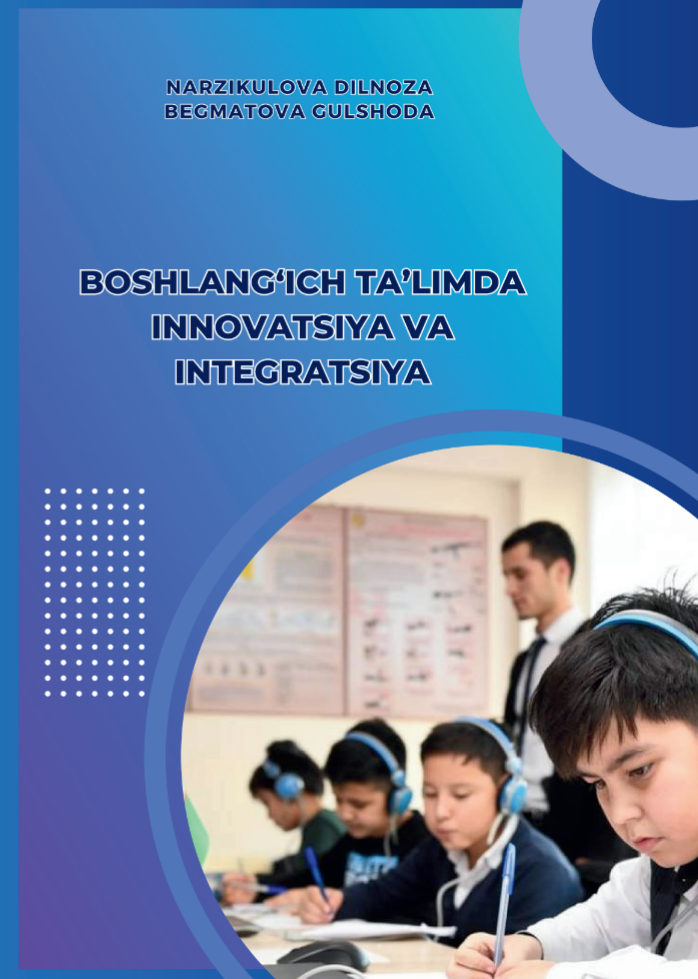
Boshlang‘ich ta’limda innovatsiya va integratsiya (Innovation and Integration in Primary Education)
The textbook covers the content, forms, tools and specific features of introducing innovation and integration into primary education. It is intended for students of teacher-training universities, primary school teachers and methodologists. Language: Uzbek.
Contents
- Topic 1Content, subject, methodology and research methods of primary education pedagogy, innovation and integration
- Topic 2General laws of personality development and approaches to its diagnosis
- Topic 3Current trends and technologies of the teaching process in primary school
- Topic 4The role of general and folk pedagogy in the development of primary education pedagogy
- Topic 5Laws, rules and principles of learning in primary education pedagogy
- Topic 6Innovative pedagogy in primary education
- Topic 7Comparative analysis of traditional and innovative education
- Topic 8The children’s community and the unified teaching process
- Topic 9Deviant behaviour as a social and educational problem
- Topic 10Types and forms of organising teaching. The lesson as the main form of organising education
- Glossary and referencesA glossary of key terms and a reference list of 41 sources.
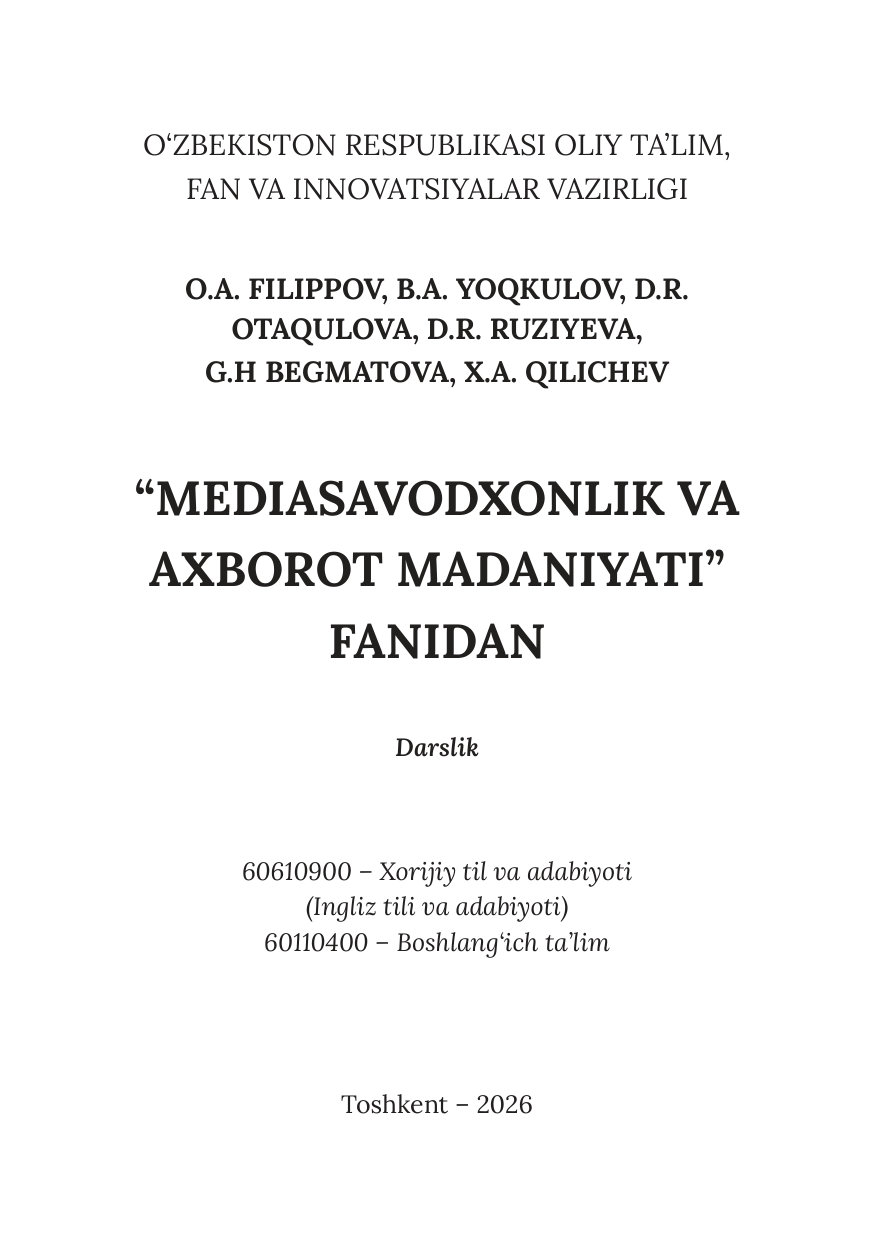
Mediasavodxonlik va axborot madaniyati (Media Literacy and Information Culture)
The textbook covers the history and theoretical foundations of media literacy and information culture, and how information is analysed and processed. It pays particular attention to understanding and evaluating information in the global media space, developing critical thinking, threats on social networks and information security. Language: Uzbek.
Contents
- Topic 1Object, subject, categories, aims and tasks of the course “Media Literacy and Information Culture”
- Topic 2The evolution of media literacy and information culture
- Topic 3The place and importance of information in society. The rise of the “information society” and its features
- Topic 4The role of media and information in civic engagement in New Uzbekistan. Developing media and information literacy
- Topic 5Competition in the global media and information space. The place of foreign media outlets
- Topic 6The structure and influence of the media sector. The virtual world and manipulation
- Topic 7Information attacks and threats on social networks
- Topic 8The impact of social networks on society and the problems they raise
- Topic 9Information-psychological, religious and cultural threats aimed at the individual
- Topic 10The emergence of computer games. Social and psychological features of internet and gaming addiction
- Topic 11The influence of virtual games on young people’s minds
- Topic 12The concept of information security. Theoretical foundations of ensuring information security
- Topic 13Moral and methodological foundations of information security in Uzbekistan
- Topic 14The culture of sharing information in the media space: cyberethics and cyberlaw
- Topic 15How the media space and the internet help develop critical thinking in society and support public oversight
- Glossary and referencesA glossary of key terms and a list of Uzbek and foreign literature and online sources.